
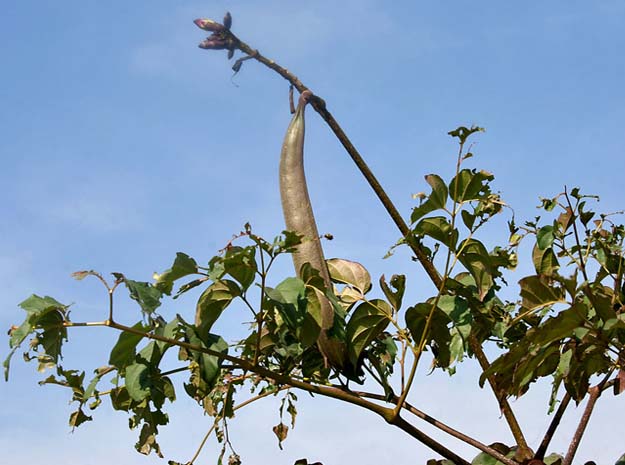
Broken Bones Plant
Genus: Oroxylum
Botanical name: Oroxylum indicum
PLANT NAME IN DIFFERENT LANGUAGES
Sanskrit: Aralu, Shyonaka, Dunduka
Hindi: Bhut-vriksha, dirghavrinta, kutannat, manduk, patrorna, putivriksha, shallaka, shuran, son, vatuk
English: Broken bones plant, Indian calosanthes, Indian Trumpet, Tree of Damocles, Idnight horror
Malayalam: Vellappathiri, Palaqapayyani, Vashrppathiri
MEDICINAL PROPERTIES
Small to medium sized deciduous tree up to 12m in height with soft light brown dark with corky lenticels, leaves very large , 90-180cm long 2-3 pinnate with 5 or more pairs of primary pinnae, rachis, very soft, cylinder, swollen at the junction of the branches, leaflets 2-4 pair ovate or elliptic, acuminate, glabrous; flowers lurid to reddish purple outside, dull or pale pinkish yellow within, numerous in large erect racemes; fruits flat capsules, up to 1 m long tapering to both ends, woody, seeds very many, flat, winged all round except at the base.
The fresh root bark is soft and juicy and cream yellow to gray in colour. It sweet, later becomes bitter. On drying, the bark shrinks, adheres closely to the wood and becomes faintly fissured.
The roots, leaves, fruit and seeds vata, kapha, inflammations, dropsy, sprain, hiccough, cough, asthma, bronchitis, anorexia, diarrhoea, dysentery, gout, vomiting, wounds, stomachic, flatulence and cardiac disorders. The seeds are purgative.