
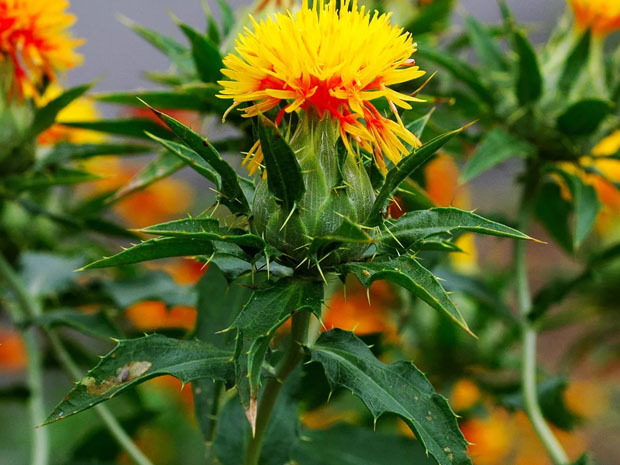
Carthamus tinctorius
Genus: Carthamus
Botanical name: Carthamus tinctorius
PLANT NAME IN DIFFERENT LANGUAGES
Sanskrit: Kusumbha, Vahnisikha, Kamalothara, Vastraranjaka
Hindi: Kusum, Kusumba
English: Safflower, Bastard saffron
Malayalam: Chenthurakam, Kuyimb
MEDICINAL PROPERTIES
Safflower is a highly branched, herbaceous, thistle-like annual. It is commercially cultivated for vegetable oil extracted from the seeds. Plants are 30 to 150 cm (12 to 59 in) tall with globular flower heads having yellow, orange, or red flowers. Each branch will usually have from one to five flower heads containing 15 to 20 seeds per head. Safflower is native to arid environments having seasonal rain. It grows a deep taproot which enables it to thrive in such environments.
Traditionally, the crop was grown for its seeds, and used for colouring and flavouring foods, in medicines, and making red (carthamin) and yellow dyes, especially before cheaper aniline dyes became available. For the last fifty years or so, the plant has been cultivated mainly for the vegetable oil extracted from its seeds.