
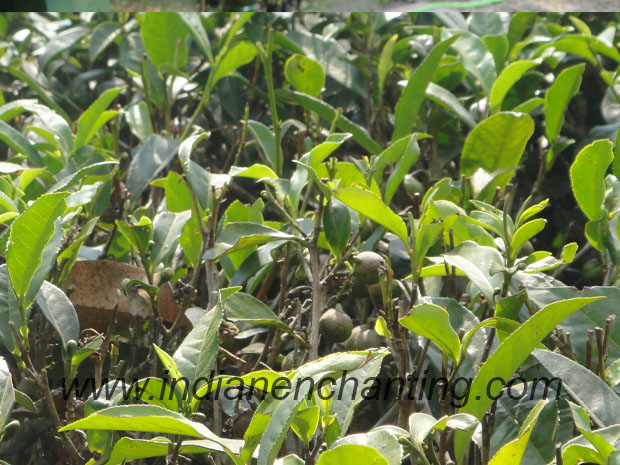
Camellia sinensis (L.) Kuntze
Botanical name: Camellia sinensis (L.) Kuntze
PLANT NAME IN DIFFERENT LANGUAGES
Sanskrit: Syamaparni, Caha
English: Tea plant
Hindi: Cay
Malayalam: Teyila
MEDICINAL PROPERTIES
Tea plant is native to East, South and Southeast Asia, but it is today cultivated across the world in tropical and subtropical regions. It is an evergreen shrub or small tree that is usually trimmed to below 2 m (6.6 ft) when cultivated for its leaves. It has a strong taproot. The flowers are yellow-white, 2.5–4 cm (0.98–1.6 in) in diameter, with 7 to 8 petals.
The leaves are 4–15 cm (1.6–5.9 in) long and 2–5 cm (0.79–2.0 in) broad. Fresh leaves contain about 4%caffeine. The young, light green leaves are preferably harvested for tea production; they have short white hairs on the underside. Older leaves are deeper green. Different leaf ages produce differing tea qualities, since their chemical compositions are different. Usually, the tip (bud) and the first two to three leaves are harvested for processing. This hand picking is repeated every one to two weeks.
Tea plant is used against the poison of viper and keeps the Kidney working in the victims of viper.