
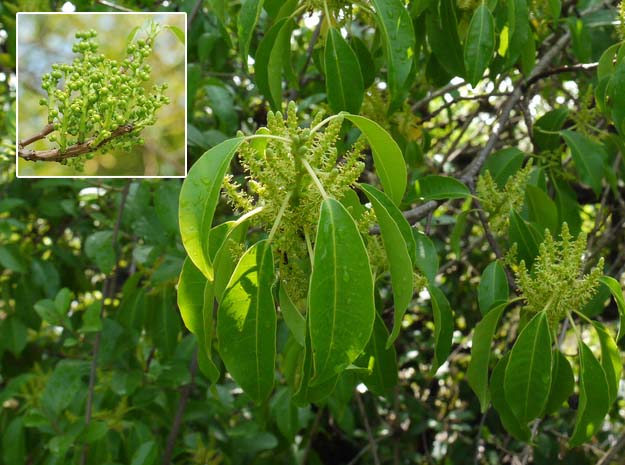
Blinding Tree
Genus: Excoecaria
Botanical name: Excoecaria agallocha
PLANT NAME IN DIFFERENT LANGUAGES
Sanskrit: agaru, gangwa, gaourai
Hindi: Gangiva, Tejbala
English: Blinding Tree, Milky mangrove, Blind-your-eye mangrove, River poison tree
Malayalam: Komatti, Kammetti, Kannampotti
MEDICINAL PROPERTIES
Blinding Tree is small tree species can grow up to 15 m high. Trees are either male or female. Male flowers form drooping tassels, while female flowers appear as shorter spikes which bees commonly visit. They fruit forms as a small dark capsule. The plant is well-protected by chemical defenses; these include diterpenoids, triterpenoids and flavonoids. he milky latex of Excoecaria agallocha, also known as Thillai, milky mangrove, blind-your-eye mangrove and river poison tree, is poisonous. Contact with skin can cause irritation and rapid blistering; contact with eyes will result in temporary blindness. The latex is extremely poisonous. Even dried and powdered leaves contain the poison which can kill fish very quickly. Owing to its complex chemistry, the plant may have many new medicinal uses.
Latex used in healing of obstinate ulcers. Smoke from burning wood used for leprosy. In New Guinea and Australia, juice used to cure ulcers and leprosy. Decoction of leaves used for epilepsy; also applied to ulcers. Roots, less poisonous than above-ground parts, are pounded with ginger and used to make embrocation for swellings of the hands and feet. Bark and wood used for flatulence. In India, seed poultice used for crippling arthritis.