
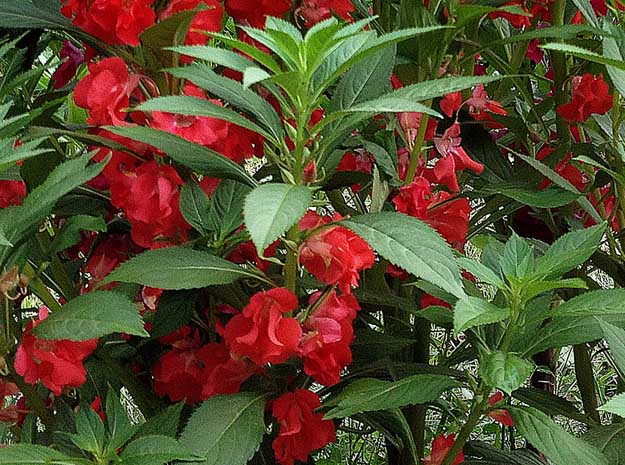
Balsam ബോൾസം/ തിലം ഓണപ്പു
Genus: Impatiens
Botanical name: Impatiens balsamina
PLANT NAME IN DIFFERENT LANGUAGES
Sanskrit: Vatikadrona
Hindi: Gulmendi
English: Garden balsam, Balsam, Rose balsam, Spotted snap weed
Malayalam: Balsam
MEDICINAL PROPERTIES
Balsam is an annual plant growing to 20–75 cm tall, with a thick, but soft stem. The leaves are spirally-arranged, 2.5–9 cm long and 1–2.5 cm broad, with a deeply toothed margin. The flowers are red, pink, purple, or white, and 2.5–5 cm diameter; they are pollinated by bees and other insects, and also by nectar-feeding birds. The ripe seed capsules undergo explosive dehiscence.
Different parts of the plant are used as traditional remedies for disease and skin afflictions. Juice from the leaves is used to treat warts and snakebite, and the flower is applied to burns. This species has been used as indigenous traditional medicine in Asia for rheumatism, fractures, and other ailments. In Korean folk medicine this impatiens species is used as a medicine called bong seon wha dae for the treatment of constipation and gastritis.
Seeds of this beautiful plant are poisonous but flowers are used to treat rheumatism.