
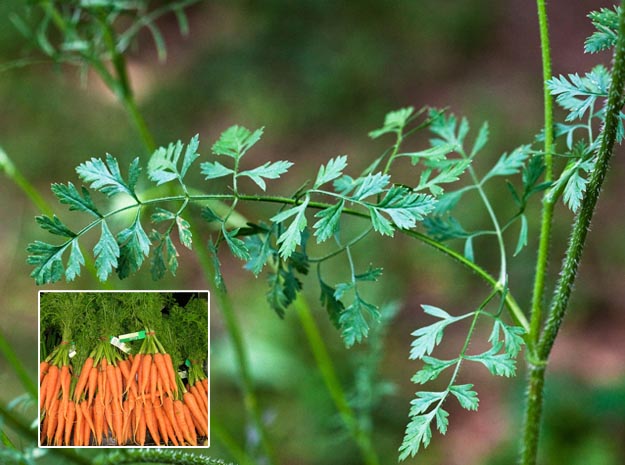
Carrot ക്യാരറ്റ്
Genus: Daucus
Botanical name: Daucus carota Linn
PLANT NAME IN DIFFERENT LANGUAGES
Sanskrit: Garjara
Hindi: Gajar
English: Wild carrot, Bird’s nest, Bishop’s lace, Queen Anne’s lace, Carrot
Malayalam: Carrot
MEDICINAL PROPERTIES
The carrot is a variable biennial plant, usually growing up to 1 m tall and flowering from June to August. The umbels are claret-coloured or pale pink before they open, then bright white and rounded when in full flower, measuring 3–7 cm wide with a festoon of bracts beneath; finally, as they turn toseed, they contract and become concave like a bird’s nest. The dried umbels detach from the plant, becoming tumbleweeds.
Carrot has a beneficial influence on the kidneys and dropsy, and prevents the brick- dust sediments sometimes found in the urine. As antiseptic it prevents putrescent changes within the body. Seeds are used as aphrodisiac and nervine tonic. Carrots cleanse the blood. Seeds are aromatic, stimulant and carminative.