
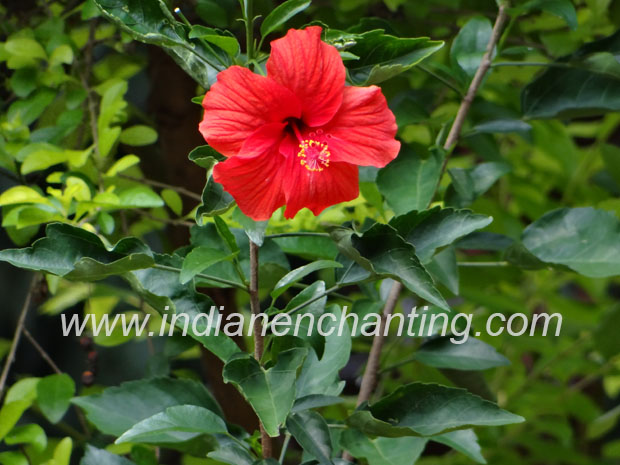
Chemparatty ചെമ്പരത്തി
Species: H. rosa-sinensis
Botanical name: Hibiscus rosa-sinensis
PLANT NAME IN DIFFERENT LANGUAGES
Sanskrit: Japa, Ondrapuspi, Ragapuspi
English : China Rose, Chinese hibiscus
Hindi: Gudahal
Malayalam: Chemparatty
MEDICINAL PROPERTIES
It is a bushy, evergreen shrub or small tree growing 2.5–5 m (8–16 ft) tall and 1.5–3 m (5–10 ft) wide, with glossy leaves and solitary, brilliant red flowers in summer and autumn. The 5-petalled flowers are 10 cm (4 in) in diameter, with prominent orange-tipped red anthers.
It is widely grown as an ornamental plant throughout the tropics and subtropics. As it does not tolerate temperatures below 10 °C (50 °F), in temperateregions it is best grown under glass. However, plants in containers may be placed outside during the summer months.
Numerous varieties, cultivars, and hybrids are available, with flower colors ranging from white through yellow and orange to scarlet and shades of pink, with both single and double sets of petals. The cultivar ‘Cooperi’ has gained the Royal Horticultural Society’s Award of Garden Merit.
Hibiscus rosa-sinensis is considered to have a number of medical uses in Chinese herbology Lokapure s.g.et.al their research indicates some potential in cosmetic skin care; for example, an extract from the flowers of Hibiscus rosa- sinensis has been shown to function as an anti-solar agent by absorbing ultraviolet radiation.
The Root, leaves and flower of the Chemparuthi plant is used for arterial hypertension, diabetes, burning sensation during urination, menstrual disorders, cough, fever, dandruff, and hair fall. Leaves, is one of the component of Chinese traditional medicine.