
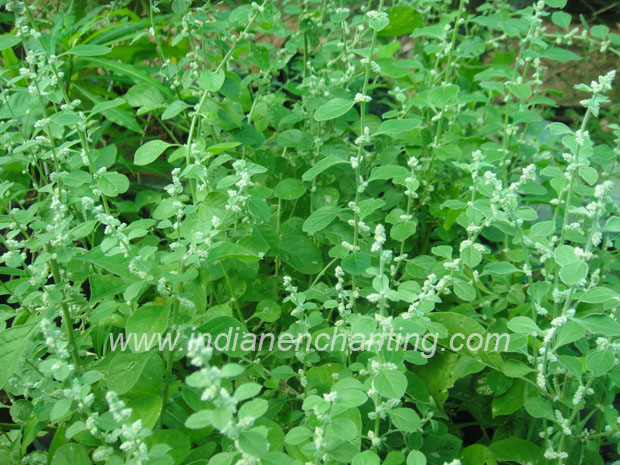
Cherula ചെറൂള
Family: Amaranthaceae
Genus: Aerva
Botanical name: Aerva lanata Juss
PLANT NAME IN DIFFERENT LANGUAGES
Sanskrit: Astmabayda, bhadrika, bhadra,bhadram
English: Mountain Knot Grass
Hindi: konda, chaya
Malayalam: cherula, cheroola, cherupula
MEDICINAL PROPERTIES
The Knotgrass is abundant everywhere, a common weed in arable land, on waste ground and by the roadside.The root is annual, branched and somewhat woody, taking strong hold of the earth; the stems, 1/2 to 6 feet in length, much branched, seldom erect, usually of straggling habit, often quite prostrate and widely spreading. The leaves alternate and often stalkless, are variable, narrow, lanceshaped or oval, 1/2 to 1 1/2 inch long, issuing from the sheaths of the stipules or ochreae, which are membraneous, white, shining, torn, red at the base and two-lobed. The flowers are minute, in clusters of two to three, in the axils of the stem, barely 1/8 in. long, usually pinkish, sometimes red, green, or dull whitish. In contrast to the other Polygonums, there is little or no honey or scent, so that the flowers are very rarely visited by insects and pollinate themselves by the incurving of the three inner stamens on to the styles. It begins flowering in May and continues till September or October.
The plant has astringent properties, rendering an infusion of it useful in diarrhoea, bleeding piles and all haemorrhages.
The decoction was also administered to kill worms and helps the process of urination due to viper bite.